Thursday, December 30, 2021

Many Judaisms, One Me

As you can probably tell if you've read more than one or two things on here, I am Jewish. Many of my heroes are Jewish as well. Most of them were not religious, and I am not religious either. I love Kabbalah because it's trippy as shit and harmless as long as you don't take it too seriously. Traditional religion is not my bag and not likely to become so outside of things like classes. I'm Jewish by choice, meaning that I converted.

REASON

Atlas Shrugged

Ayn Rand, creator of The Collective, a cult, is one of the greatest and most bizarre voices for reason I have encountered. Everyone should wrestle with Rand. If you accept her philosophy or reject it outright, you have not tried hard enough.

IMAGINATION

Contact

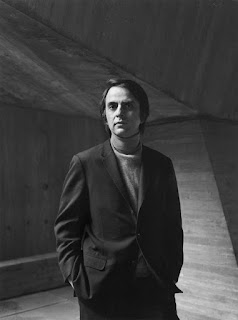
Carl Sagan dedicated his life to science and education. His essays in a National Geo book when I was a kid lit a candle in the dark. His books have made me a better father.

COURAGE

Ethics

When I converted to Judaism, I took the name Baruch in honor of Baruch Spinoza. His ideas gave us the modern world. He walked away from the only community and family he had in order to be true to himself.

SPIRIT

The Thirteen Petalled Rose

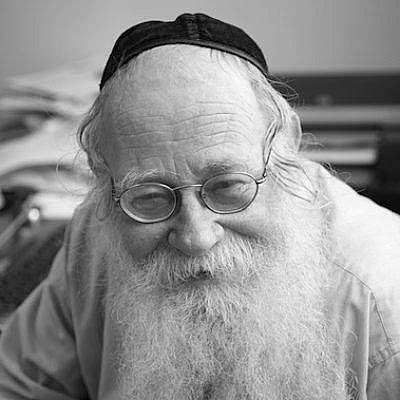
A couple of years ago I discovered the works of Rabbi Adin Steinsaltz, of blessed memory. I plan to read a little Steinsaltz every day for the foreseeable future.

Friday, December 24, 2021

CRUMP 2024, man!

Y'all.

Do you remember when this happened? I would say, "Poor Paul Winton," but I think he loved it even more than I did. And I had a BALL messing with people that year. He was the only person to get the red word joke without some kind of prompt.

McPhistos:
you'll be lovin it

Sunday, August 16, 2020

Adin Steinsaltz: May His Memory Be a Blessing

Adin Steinsaltz was a scholar whose works I've discovered in the last couple of years. Although I've only read a handful of his books, his work has already made an indelible mark on what I believe, the way I think, and how I live. His most notable accomplishment is making the Talmud accessible to everyone by translating it into modern Hebrew, then into other languages from there. His book The Thirteen Petalled Rose is essential reading for people who want an introduction to Kabbalah.

I plan on reading the Steinsaltz Talmud every day for the next few years, with gratitude for the man whose motto was, "Let my people know."

Wednesday, July 29, 2020

Public Service Announcement: when I cleaned up my diction

Attention all personnel. Attention all personnel. I'm bringing back Kiss My Grits. Somebody has to do it.

Unlike Van Morrison, I can clean up my diction* and still have plenty left to say.

That is all.

*Note: Just because I can clean up my diction doesn't mean I have a hint of a whisper of the beginning of any shitwhistling intention of doing so, to be entirely clear. Lenny Bruce, George Carlin, and Al Swearengen are linguistic fucking heroes. I'm just bringing back a good one.


Sunday, July 19, 2020

Parenting After Age 8: An Experimental Approach Using Observation, Reason, and Love

Rand and Rogers: American Icons

I recently restructured my home by combining the ideas of Russian-Jewish immigrant Ayn Rand(1), born Alisa Rosenbaum, daughter of Zanovy, and Fred Rogers, born Fred McFeely Rogers. McFeely was his mother's maiden name.

Ms Rand is one of my favorite thinkers despite her many flaws and those who follow her unquestioningly. She was a cult leader who engaged in seriously evil, manipulative behavior. Her work is deeply problematic on many levels. The video game Bioshock illustrates in graphically violent terms the failures of her philosophy. She famously encouraged emotional repression, rigid moralism, and unkindness. I am a friendly critic of Rand, not a follower. Truths can be found in all sorts of places, and Rand was mostly right but intentionally provocative. For example, her book The Virtue of Selfishness would be more accurately titled The Virtue of Self-Actualization (true every time she uses the word "selfish" in a positive manner).

Much of what I do is a based on distillation of Objectivism. This is a philosophy created by Ayn Rand and formalized by Nathaniel Branden. He was the informal second-in-command of Rand's cult. Like her, Branden was an immigrant who changed his name, morphing Blumenthal into Branden (B+Rand+en). He and Rand had an affair while he was in his 20s and both were married. He brought Alan Greenspan and others into her inner circle and ultimately left the cult in the late 60s, leading to its crackup. Branden became a psychologist and established the psychology of self-esteem in the 1960s and 1970s, rooted in Objectivist thinking. Achievement is the root of self-esteem according to Branden.

I think of Mister Rogers whenever I want to be a better person. That one's simple.

I have five children: 19, 17, 15, 8, and 8. The experiment has been a remarkable success so far. These are initial notes and observations.


Philosophy

By applying reason to objective observations and principles, and using those results to filter our experiences, instincts, and desires, we can ascertain the meaning of life and how to behave.

My children embrace the concepts of inalienable rights, though we each have our own ideas about what that means and how to live it. Dissent and skepticism are among the greatest human values. I encourage dissent and do my best to manage it.
  • We can frame most situations in terms of self-interest, including the interest of family or whatever in-group a person consider part of their Self (religion, political party, etc).
  • When we do this, we can see our motivations more clearly and understand when we are acting out of need versus want.
    • Needs are needs. Food, shelter, love, things like that.
    • Everything else is a want. We do not need fun things. We want them.
    • Framing needs and wants appropriately empowers people to make better decisions.
    • We cannot control our needs. We can control our wants.
    • Treating a want as a need leads us to pursue things that harm us. Those are blind spots.
    • When you want something, it is ok to want it. Don't trample on others to get it. Use any ethical means necessary to get it if you want it badly enough.
    • Be as kind as you can when pursuing your dreams. Sometimes you can't be kind, but you should always try.
    • Figure out who you are and what you want.
    • This view layers the Greek ideal of eudaimonia, or human flourishing, with Enlightenment thought. When we put eudaimonia at the center of deontological ethics, we show how everyone has a right to pursue self-interest by any means necessary, and we have a duty to use means of pursuit that minimize harm to others, particularly if we are harming them involuntarily.
    • Certain things are right and wrong, and those values never change. They are normative ethics, meaning that we are required to follow them in order to live fully human lives. Those rights and wrongs are defined by the balance of every individual's rights. They never change. They are hardwired into our species. We have an obligation to our fellows to respect their rights as much as we respect our own, while doing everything we can to maximize our own self-interest, as broadly defined somewhere above. This creates a normative ethical system that is deontological (based on duty), universal, unchanging, and rooted in eudamonia, or the the most amount of human flourishing desired and possible for every individual, whatever creative form that takes.
    • Our individual rights and our duty to preserve others' are two sides of the same coin.
    • Empathy is hardwired into the mirror neuron system. Pay attention to what it tells you.
    • The children and I are moral equals. I got here first. I know more. Once in a while I demonstrate more self-control than others. I manage the strategy for our family. Setting rules and boundaries is my job. They manage tactics whenever appropriate.
  • Every human being wants The Three Things: Life, Liberty, and the Pursuit of Happiness.
    • My 8yo son envisioned himself chasing something to understand pursuit.
    • My 8yo daughter imagined a dog chasing a cat.
  • We can reformulate this more concretely as The Four Things: Life, Liberty, Property, and Love/Family.
    • We started with the classical Jeffersonian rights of Life, Liberty, and the Pursuit of Happiness.
    • They love the idea of pursuit, but my 8yo daughter thinks that Pursuit of Happiness is too squishy. Property makes more sense to her.
    • We discussed what you need to Pursue Happiness and realized that it is too intangible to use as a criterion for judgment. Paine, Rand, and related thinkers are missing Love/Family, which is essential to being human.
    • We worked out together how The Three Things are actually The Four Things when you dig in.
      • Pursuing happiness is a mixture of liberty, property, and family based on personal preference.
      • If we pursue happiness without a ramrod ethical core, we can do bad things easily by trampling others' rights to The Four Things.
      • Even with a strong ethical core, it is easy to violate others' fundamental rights. We need to practice care and empathy if we want to avoid this.
    • We alternate between talking about The Three Things and The Four Things depending on how concrete a situation is.
    • When thinking of one's own feelings, The Three Things are important. When thinking of others' The Four Things are.
    • By looking at a situation through these two similar sets of lenses, we can make more objective decisions.
  • When The Four Things are manifested in an ethical, healthy way and we have more of them, things get better. When they are bad or we have less, things get worse.
  • Therefore we can ascertain that The Four Things represent the essence of what it means to be human.
  • The Four Things provide a framework on which we can hang a meaningful life, but they are not meaningful in themselves. Instead, pursuing them ethically allows a person to understand what they value and what meaning their life will have.
  • Everyone gets to decide the meaning of their own life. That meaning is rooted in some form of creative work, whether that work is inventing a new thing or being an especially good listener. 
  • Ethics are essential and universal.  When people tell the truth, everyone is allowed to make better decisions.
  • Morals are important to understand and contextualize ethics. They are cultural, personal, or both.
  • Strong ethics and morals are both important even though ethics are universal and morals are not.
  • Morals are ethics in action, just as the mind is what the brain and body do when they work together.
  • An ethical life is one that seeks to get as much of the four things as possible without taking away from others' four things.
  • Relationships are nonzero sum games, so everyone wins or everyone loses rather than there being a winner and loser.
    • This is a slight oversimplification. There are obviously winners and losers.
    • The important thing to understand is that a relationship is like an economy. There isn't a fixed pie that represents wealth, or love, or whatever.
    • You can grow or shrink the pie (economy, relationship) by making wise or foolish decisions.
    • This is one of many reasons that capitalism grows pies while communism shrinks them. When everyone is trying to produce and earn more, economies grow. When people are fearful or when an overly powerful authority demands certain things, people make worse decisions and they shrink.
    • In addition to the inhumanity of command economies and their analogue, controlling relationships, they are inefficient. No one should tell another what they will be best at doing. No central authority can set wages as fairly and effectively as the free market.
    • The free market requires laws to establish fair play and equality. They don't always work.
    • The same principle applies to relationships. Love and empathy grow the pie. Fear and suspicion shrink it.
    • The rules of the house exist for the same reason as regulation: To ensure that everyone can maximize their enjoyment of The Four Things while balancing their rights with everyone else's.
  • All of the good things in life come from people pursuing The Four Things ethically.
  • All of the bad things come from people being unethical or seeking something other than The Four Things.
  • Physical force is wrong unless it is an act of defense.
  • All cultures must be respected. Most people are just doing their best to get The Four Things. Cultures reflect this. Some do a better job than others.
  • Most people are doing their best and need understanding more than help or advice.
  • People work harder when they negotiate compensation. Chores lead to wages of the individual's choice, if the request is reasonable. If not, we haggle. 
  • Whenever people fight, they must slow down, listen, and attempt to understand the other. No one is allowed to yell.
  • Being allowed to yell and yelling are not the same thing. No robots here, I assure you. We do try.
  • I allow them to spin our their own conclusions from the foundation of the four things.

Education*

*Important Note: These are supporting details to add to what my children have already mastered with actual educators at a world-class school. That is where it's at. I'm just doing my job as a father to reinforce things and teach critical thinking skills. Bear in mind, my grandfather wrote dozens of books after retirement, primarily focusing on easy-to-read American history and etymology. These family values go deep.

The twins' minds expanded three sizes in the first few weeks. They want to learn everything about everything. So far this summer they have learned:
  • How to use a thesaurus
  • How to use a dictionary
    • How to read an entry
      • focus on the importance of order when reading definitions to understand which meanings are most and least common
    • How to read phoenetic symbols
      • listed on the bottom of each page of our Elementary dictionary
    • How to triangulate a word
      • They know how to do this, but we honed the skill
    • How to read a book with a dictionary to help you understand words on your own
      • This is what started it. I got tired of spelling and defining words, and I realized that I've been infantalizing them.
      • A simple 20 minute lesson is all they needed. They read the dictionary for fun now.
    • The purpose is to create self-sufficiency, good vocabulary, and accurate pronunciation
  • What's in an almanac
  • That an encyclopedia will provide almost all the information they'll need for many research papers.
    • I ordered a World Book set from ebay for $85. Still trying to coordinate delivery with the USPS because of course I am. The pandemic makes mundane tasks onerous, and the postal service is what it is.
  • How an appropriately deployed slingshot or paper projectile can add just the right amount of zest to life, but never during instruction time. Exceptions include instruction time related to the the safe use of dangerous objects and general troublemaking. These instructions are typically provided through example, though naturally we have all the right books as well. Harmless projectiles are discouraged but allowed at such times. Never in school.
  • How a child can have a full, rich life with a friend, a pencil, some paper, a rope, a pocket knife, a needle, a candle, a lighter, a stick, a ball, the right books, and loving caregivers to instruct in the safe use of dangerous objects, supervise everything for a few years, and take away dangerous objects when not in use.
  • It is helpful to have a father who
    • specializes in the safe use of dangerous objects
    • spent his summers and many weekends in college years working at camps with a focus on doing dangerous things safely
    • has been learning to deal calmly with emergency situations for decades, as a rough-and-tumble kid, as a camp counselor, and as and parent, including
      • recalling with crystal clarity what it feels like to have three hernias at the same time and why you should never challenge children to punch you in the gut as hard as they can
      • "grounding" people who do not follow rules and safety protocols (At Windy Gap, wranglers were grounded if they were unruly or had any safety violations)
      • the nightmare  a camper being dropped out of tree by a wrangler who was not following safety protocols, in front of my eyes
      • many broken bones
      • stitches
      • meningitis in a stepkid and in myself, including the horror of holding a sweet child for a spinal tap
      • multiple rare diseases
      • helping others through emotional emergencies and learning how to listen by volunteering for decades
      • wrecking a pickup truck at age 12
      • driving my brothers around on a Bush Hog as a teenager and knowing what to do if the tractor started to roll over on the hill
      • cleaning out horse stalls and swimming pools more times than I can count
      • learning from experience that you need a good pair of shoes and a dull knife before you play mumbletypeg. Got the scars to prove it
      • knowing from personal experience of how to stop, drop, and roll during a Roman candle/bottle rocket war
      • understanding that I should never explain that there is a safe way to cliff dive in Tennessee
      • knowing that it's much better to describe what happens to someone when a bottle falls on them from that cliff
      • trying not to remember how foolish I was to go spelunking, armed only with a flashlight, with my friends from Kroger no matter how knowledgeable they seemed and regardless of how powerfully the combination of a mullet, Fakeleys, a mustache, and a few more months on the job conveyed a level of experience cave diving with zero equipment. Good grief.
      • remembering how scary it is to look below you while climbing a mesa with no equipment 
      • explaining to my daughters precisely what happens if you don't tie your hair back since I had "Robert Plant hair" in high school and lots of associated lighter use
      • being able to say why you should never try a handheld stun gun as a form of self-defense because of that one college-age experiment with Grandpa Webb, of blessed memory
      • Note: He zapped me with a stun gun. It was my idea. He died 15 years later due to heart failure. I don't want to create the impression that they were related. The stun gun thing was hilarious. I still miss him.
      • describing how important ear protection is and how important it is to pay attention when using power tools, something I learned in a brief factory gig during my year at the University of Tennessee
      • stating emphatically that I would never willingly allow my children do a fraction of the things I enjoyed surviving. Not even my teenagers know 5% of what I've scraped my way through.
      • Yes, I know they stop asking permission eventually. I stopped long before age 8. I am so fortunate not to have clones.
    • has a few years of experience teaching. When I was an apostate from Judasim, I spent three years teaching Sunday School, with a focus on feelings, art, music, and personal experiences instead of religion. I didn't want to mislead anybody, so we stuck to the basics like love and empathy and virtues that I borrowed from Comte-Sponville. They were great kids.
  • Movies and toys and video games are nice to have.
  • People are better off with the fewest restrictions possible on video games, tv, and candy. Knowledge about over-consumption will lead to self-control. If it does not, people learn from their mistakes.
  • A candy bar that is uneaten out of wisdom is better for a child than a candy bar that is uneaten because it is forbidden.
  • They are finally old enough to get it.
  • The scientific method
    • What it is
    • How it works
    • How to apply it to everyday life
  • Evolution by natural selection and how Darwin’s dangerous idea changes our understanding of everything since everything evolves, from bodies to ideas to language. They understand basic genetic and memetic concepts going into third grade. 
  • Why the only way humans can become a different species is through extreme isolation like a group of humans living on a different planet for thousands of years.
  • How we must rely on the evolution of ideas and technology instead of bodies if we want to keep improving life for our species and others.
    • We are the same species as cavemen, with the exception of some epigenetic changes that probably did not alter human nature.
    • If we follow our instincts instead of applying the powers of observation and reason to our insticts, we are no different than cave people.
    • The accumulation of technology and human experience is why life is improving and is likely to continue.
  • Epistemology, memories, and dreams
  • How Ada Lovelace dreamed of flying as a 12yo, and how the flying machine she invented laid the foundations for other things. Lovelace is known as the mother of computer programming. My 8yo daughter loves Ada.
  • How a trip to the library inspired 5yo Carl Sagan. My 8yo son loves Carl Sagan. His twin sister pored through Cosmos after we read a picture book about him.
  • Jefferson’s theory of individual rights
    • The sole purpose of government as being something to institute and balance individual rights
    • What each branch of government does
    • How expanding notions of individual liberty have led to more people getting rights over time
    • How judicial precedent works and evolves, and how it played a role in securing the rights of minorities and other fragile groups
    • How Jefferson's theory grew from the ideas of Paine, Locke, and ultimately Spinoza.
  • How the application of Spinoza's ideas contributed to the radical Enlightenment, which is why we have individual liberties, capitalism, artistic self-expression, religious liberty, science, medicine, most forms of fiction, and everything else that makes the modern world so wonderful.

Judaism

I like to think that my home is firmly rooted in Jewish values. It is certainly based on Jewish thinkers. Almost everything I believe can be traced directly or indirectly to a Jew somewhere in history. It's taken me 45 years to figure that out.

The connection between Judaism and my home philosophy may seem tenuous, but it is not. I am a classical liberal, which is very similar to libertarianism, an intellectual movement founded on five 20th century thinkers: Ayn Rand, Milton Friedman, Friedrich Hayek, Ludwig Von Mises, and Murray Rothbard. A novelist and four economists. Four Jews and Hayek, who spent a lot of time with Jewish intellectuals and speculated that he was of Jewish ancestry, enough that he researched all of his ancestors going back five generations.

One of the biggest things I have learned so far: There is no Judaism. There are Judaisms. They all have certain things in common that I won't get into here. The Judaism that I model in my home is the one I understand: that of Spinoza, the Haskalah, Rand, Friedman, Einstein, Sagan, Shubin, Pinker, Simmons. I don't know very much about religion, so I leave that to the experts to teach my kids while I study on my own until I have time to do so with a scholar someday. I've got plenty of time.

The twins reinforced the value of a Jewish education a couple of weeks ago when they explained the ending of Raiders of the Lost Ark, which is pretty much the best movie ever. I don't think I've ever seen them so excited. They understand that it's special effects, but this is something they've learned about in school, and they're seeing it depicted in my favorite movie, and those are not actually ghosts, Dad, so it wasn't a spoiler, and they're teaching me this time, which is as exciting as things get once you've rinsed off enough summertime grime to be comfy and had your fill of ice cream. They wish it were possible to show it in school but understand why it's not.

Life, Garrison Style

The children have my permission to pursue the four things however they want, as long as they do so ethically and seek guidance when safety or difficult questions are involved. No one here is a big risk taker. No third degree burns or broken bones seem likely with me in charge.
  • Curiosity is front and center.
  • The sole form of discipline I use is taking away electronics. This is never used to punish. It is simply used to force a pause in the conversation until everyone is calm enough to talk.
  • I can't remember the last time I had to take away electronics from the twins.
  • Instead, I use timeout as calmdown time. I allow the twins to select however much time they will need to process their emotions and move from, “I’m mad right now, but everything is going to be okay,” to, “Everything is okay. I think I can talk about this.” If they try to rush out, I gently redirect them back to time-out.
  • Everything else is done through a positive incentive structure, which includes wages for basic chores and the ability of people to name their price to do an extra job, subject to negotiation. I want them to ask big first.
  • The twins said they wanted to clean all the walls and bathrooms if I would let them pick out a nice toy. That was their idea. I love it. I accepted their offer immediately to create a powerful set of memories. 
  • We have been working out scripts to help them navigate difficult situations. The goal of the scripts is to reveal the motivation of each person and understand that a particular thing (or idea, whatever) is a limited resource that must be negotiated. They work through trade-offs together and come up with a compromise if one is agreeable.
  • Script development is hilarious.
  • Fear never helps children. I do everything in my power to use communication, love, compassion, empathy, reason, and trust.

Rights, Words, and the Power of Positive Imagery

What does all of this mean? Is it just random nonsense? Perhaps. I think there is more to it than that. By envisioning who we want to be, and by working hard to achieve it, we can become better people, and make the world better, healing it through one act of love after another.

I believe in the power of achievement and the self-esteem it can create. I believe in kindness. I believe in gumption, which is one of the things that makes America great. We hustle. We remember our immigrant roots, whether our ancestors came seeking opportunity or bound in the chains that humans so frequently bind one another in. On the 4th of July we talked about individual rights and ate food from all over the world.

Kindness does not mean being a wimp. It does not mean checking your convictions out at the door. It means gentle truthtelling. It means firm boundaries without sharp edges.

It is wrong to take unless you must. It is much better to create and share, and to ask the same of others.

When we recognize our rights as rights and all others as our equals, we see that we have an obligation to care for others, just as they have an obligation to care for us. Interdependence is part of the deal. It's essential to being human.

The rights of life, liberty, property, and family are universal. Every human being is a family member. Animals are too, but less so. I find it sad and strange that people are often more willing feed stray dogs than the homeless. The phrase, "Pets' lives matter," is less controversial than, "Black lives matter." To many people, pets matter more than black people. I'm not talking semantics. Our use of words reflects and shapes our view of the world. Many worldviews are nasty, brutish, and small.

We have a right and a responsibility to give, to care, to feed, to shelter, to provide equal justice, to make health care available to all, and to ensure that all children and adults have access to knowledge and education. In my opinion, we would do well to refocus public policy away from left/right and toward practical solutions that ensure the provision of necessities to everyone, with the least amount of central authority possible. A tall order for sure.

To simplify things, I refer you to this infographic from Parks and Recreation. Even when under the influence of Snake Juice, which I would never touch, Ron Swanson(2) provides a roadmap to better living.

Hard work. Self-reliance. Gentle truthtelling. Kindness. Life is good. Please and thank you.


Author's Notes
(1) The biographical information about Rand is based on my recollection of books that I read years ago: Goddess of the Market: Ayn Rand and the American Right by Jennifer Burns, Radicals for Capitalism: A Freewheeling History of the Modern American Libertarian Movement by Brian Doherty, Ayn Rand and the World She Made by Deckle Edge, and Why People Believe Weird Things by Michael Shermer.
(2) Ron Swanson is obviously a wackadoodle, but he is a delightful one. He reminds me of my father, and trying to be like Ron often leads me act a bit more politely, though not always. Given the fact that this is a piece on my kids and education, absolute clarity here seems important. My college entrance essay for Davidson was a cynical one-page comic strip. I've never been able to take things 100% seriously.

A Dispatch from Susanoo: Looking Back On a Turning Point For Japan

Note: This is something I wrote in 2011. It was a thought experiment in the positive consequences of natural disasters if people respond appropriately. I haven't re-read it.

Captain’s Log, Stardate 188220.7194.
Our advance team has returned from surveying the damage on the planet Susanoo, in the Izanagi system. Hotaru, a massive, long-dormant volcano, has erupted, destroying six cities in the Miyazaki prefecture and taking the lives of 50 million Susanoons. The air quality of approximately one third of the planet is degraded, and carbon capture devices have been deployed to clean the air worldwide.

The population of Susanoo has mobilized, sending food, medical staff, and military personnel to the affected islands to quell riots, search for survivors, beam them to safety if stable enough, and use shuttles to transport those who are critically injured. Additional aid is arriving from Amaterasu and Tsukuyomi, the other Class M planets in the Kamiyonanayo galaxy. Americans are sending a fleet of starships to rebuild the destroyed cities and to protect Susanoo from Saracen pirates, who have arrived en masse and are conducting raids of the Hotaru ruins.

Fear is widespread on Susanoo. The eruption of Hotaru appears to have destabilized the thorium reactor near the planet’s core. Along with the other reactors in its chain, it provides approximately 50% of the power for the planet. While thorium is not as dangerous as other radioactive materials, there is concern that waste containment vessels could crack, leaking waste into magma and putting millions at risk of radiation poisoning. Scientists and military personnel in HAZMAT-theta suits are beaming into a containment facility near the planet’s core to attempt repairs to the reactor.

Captain's Personal Log, Stardate 188220.7479.
En route to Susanoo, I studied the planet and its people’s history. A small group of Japanese settlers from Earth arrived here over two hundred years ago, searching for an ocean planet with untapped natural resources and a biosphere that would be friendly to the fish, animals, and plants native to their region of Earth. While most on Earth started eating vat-grown meat by the middle of the twenty-first century, sushi connoisseurs claimed that in-vitro fish, particularly rare varieties, could not match the texture and flavor of live fish, and so they sought to populate oceans with their favorite species, and fishing had been tighly regulated and controlled since the adoption of the 2072 United Nations Animal Rights Resolution. More importantly, they practiced a revitalized form of Shinto and sought out a land which they could shape with their religion.

After a successful initial colony (New Tokyo), approximately 1.5 million additional Japanese Terrans moved to Susanoo and established additional colonial outposts. A high level of industrialization and a free market led Susanoo to prosper much more than other planets had, and within a few years, it no longer required Japanese subsidies. It sought and gained independence from Japan. Before long, its economy had surpassed the mother country by orders of magnitude. It now boasts a population of 1.8 billion.

History from the early modern period fascinates me. The explosion of technology and medicine that occurred in the twentieth century continues to be unparalleled, and while average human life expectancy is now one hundred twenty years, the gains that were made in the last five hundred years were incremental, all built upon the advances made in the 1900s.

The twentieth century is the most paradoxical period in history. Humanity made more strides than ever--technologically, scientifically, and medically--during the same hundred years that more men were murdered by leaders than any other century in history. The best and bloodiest man has to offer were on display, although rarely in the same country at the same time.

Things that modern Terrans take for granted – fifty-storey greenhouses, in-vitro meat, genetically modified, highly nutritional fruits and vegetables, an abundant supply of clean water, vaccinations that have wiped out the maladies that plagued twentieth-century humanity – are all based on work that had begun within a century of the discovery and industrial production of antibiotics. I still have a hard time imagining life before teleporting and near-light space travel, though.

I’m having a hard time being an objective observer during the mission to Susanoo, and I suppose that my ancestry has something to do with that. My father’s ancestors immigrated to America from Japan in the late twentieth century, because there were good engineering jobs there. A few years later, Japan reached a major turning point: The Tōhoku earthquake. There’s no telling if I would have been born if Goro Mamoru had not moved from Sendai to Los Angeles, and I wrote my Academy graduate thesis on the population effects of this disaster.

Measuring 9.0 on the Richter scale, the Tōhoku earthquake was a massive event that caused a huge tsunami, killed thousands of people, destroyed and damaged over a hundred thousand buildings, and shifted the world on its axis by almost 10 cm. Like the recent eruption on Susanoo, the earthquake damaged multiple nuclear reactors, leading to the release of a dangerous amount of radioactive material.

People were frightened. Everyone was told to stay in their home, in order to be protected from fallout. Thousands of bodies washed ashore. The terror of a natural disaster ruled supreme. For the next few years, people were terrified every time there was a small quake, or sometimes even when there was a loud crashing sound. Goro Mamoru wrote on his blog (a sort of public diary that was popular in the early twenty-first century) that he had lost three cousins in the tsunami but that he had faith in the Japanese people, his people, that they would prevail.

Slowly, across Japan, life returned to normal, with one change: People started having babies again. Before the earthquake, Japan’s fertility rate had hovered between 1.2 and 1.5 births per woman for years. This is the point where a population collapses, and if Japan had continued on this course, it would have become a former civilization, or perhaps a colony of China. But as it happened, the fertility rate spiked to near 3 for a few years, then decreased to 2.5, then to 2.1, which is the replacement rate. In the next couple of hundred years, it would drop below 2 sometimes, and sometimes it would be close to 2.5. The ancient people of the island of Japan survive to this day, due to the way that they turned a curse into a blessing, without even knowing that they had done so.

I have faith in the people of Susanoo, my distant cousins, that they will survive this disaster and thrive, much like the people of twenty-first century Japan did. As horrible and tragic as any particular moment in time may be, and as frightening as periods such as the Iran-Israel nuclear exchange must have been for those that survived them, history’s arrow since the days of George Washington has essentially been one that has led to greater prosperity and freedom. I have faith in the Susanoons, just as Goro Mamoru, the first in my father’s line to live in America, had faith in the Japanese.

They will rebuild, and if we are a just people, we shall help them.

Saturday, July 18, 2020

The End of Church ☮️

Note:
I spent 2009-2010 converting to Judaism. I became angry and confused about what it meant to be Jewish. It wasn't Judaism's fault. Saying anything beyond that is inappropriate.

I started going back to church in 2012, and during my divorce St John's Episcopal Church took us in, cared for our needs, and never judged us for our differences. Later, St Martin's Episcopal Church did. These communities are full of open, kind people. I learned a lot about how to be a better person from them, even though it was a hard time for me. I can never thank my friends from those years enough. I'm sorry if my silence hurt.

The essay below describes why I stopped believing in Christianity and left church. It doesn't describe the guilt and agony I felt the entire time I was there, I wasn't myself. I used to worry about offending people when I say why I believe Christianity is untrue without being offensive. With time and reflection, now I know: Belief is what it is.

  • When the twins started attending Charlotte Jewish Day School in 2017, I remembered what it meant to be Jewish and recognized that I had a responsibility to raise them un-divided. I had stopped believing in Christianity by this point. Going to church started to make me feel ill.
  • In May 2018 I built a minecraft Fortress of Solitude. I think I was telling myself something. 
  • I returned to Judaism in June 2018. I wrote this letter, but I knew the time wasn't right to share it yet. Except for getting rid of the word "woke" because it is obnoxious and silly, the piece is unchanged.
  • In July 2018 I quit facebook and stopped returning calls.
  • I wanted to rediscover and reclaim the self.
  • In December 2017 I weighed over 260 pounds. I dropped down to 170 by getting rid of fat. Now I hover around 190.
GG July 2020

The End of Church
It would be nice to talk about this in person, but this is easier. I think better with my fingers than with my lips. And I’m only courageous up to a point. And I need to talk to a few people at once.

In the past few years, I've taught your kids Sunday school. I've played bass and sung in worship services. I've done comedy routines to lighten things up. I put together an ecumenical hymn party at a bar to try bring folks around the city together. I've helped (sort of) with Game Night. I helped organize a group of amazing guys. So I'm writing this because you deserve to hear it directly if you want.

Our friendship developed because we were Christians. I'm not a Christian anymore. I hope that we will still be friends without Jesus.

You probably know my story since I am direct and unguarded: I was a Christian for over 30 years. I was an atheist--out of anger more than conviction--for a year or two. I studied and converted to Judaism. After a college reunion, I missed the Christian friends of my youth. I felt torn between the religion of my upbringing and the religion that I had chosen. I started going back to church, trying to recapture the magic.

What I've told few people is this: I couldn't make it work, at least not once I started taking church seriously instead of quietly coming and going.

I tried to claim dual citizenship: Jewish and Episcopalian. I couldn't. I tried to believe the things that I had believed when I was young. I couldn’t. I moved from one church to another, hoping that a more progressive house of worship would allow me to hold humanism and Judaism and Christianity together, in my mind and heart, at the same time. I couldn’t. I clutched to find bits and pieces, scraps of something to hold onto, a reason to stick around. I couldn’t.

I came to that realization that I was trying to believe things I didn't believe and forcing myself and (more importantly) my kids to fit into a community of believers where we did not belong.

Only one path made sense: Move on. Grieve the loss. Direct my attention where it should have been all along: providing an emotionally healthy home for my children and giving them the tools that will help them live well. That includes setting a good example across the board. So I'm getting physically fit and spending time at home instead of being socially active. They need me every day. No one else does. That's the way it should be.

If belief is the price of admission to church, the wallet is empty. I could keep up appearances, but instead, I'll keep it real.

The reason I reject Christianity is pretty simple: If a murder 2000 years ago leads to salvation in a supernatural sense, then the man behind the curtain is the monster under the bed.

In a movie, there’s a storytelling device called a maguffin. The Maltese Falcon is a maguffin. The Death Star plans are one. Rosebud. The Ark of the Covenant. Nathan Jr. The maguffin gets the action started, and it's what the movie is about in the description on IMDb.

Movies aren’t actually about maguffins though. They’re about the relationships that play out between characters, the changes that occur in those relationships, the changes within individuals. If a movie isn’t about those things—if it is actually about the maguffin and not the relationships and change caused by the search for the maguffin—it probably isn’t worth watching.

Religion is one of society’s most potent maguffins. It brings people together around something, and that’s what those individuals focus on. In the meantime, relationships are created by the search for the maguffin, the quest for God or truth or social justice or whatever that group is into.

Those relationships are the good part. What people do together is what matters, even if the maguffin falls away. I think that most relationships work this way. Hopefully those forged in religion are less fragile than those where you work together or where meet and enjoy the same things and just hang out because it's fun. I know that that kind lasts.

The maguffin that we used to talk about and pray about and worship is no longer a thing that we share, but every conversation we had is a thing that we always will. The important parts of what we talked about—at least to me—were always about life and kids and stories and music and art, not the maguffin itself.

Some of my values have changed in the last few years. I’m more liberal than I used to be. I’m more conscious of others' differences and needs. I want my kids to be themselves and live good lives. I don't care whether and what they believe about things that are invisible and intangible as long as it's not crazy talk.

The rest of my values haven’t changed. They're just not compatible with Christianity. I can be a disbeliever in church, but I can't be a disbelieving Christian, and if I'm not a Christian, it doesn't make sense to go to church.

Hopefully this helps to explain why you haven’t seen me there and won’t anymore. And I hope that our friendship will continue if there's more to it than the maguffin. I value my friends regardless of their metaphysical opinions. I hope it goes both ways. Just keep it real. I'm trying to.

Peace.